Consider the last occasion you went out to a tailor. You must have stood motionless and had measurements taken, waited days or weeks, had your clothes cut, and perhaps even returned to get them remade. Those generations have remained the same in that process.
However, today, it is a different case.
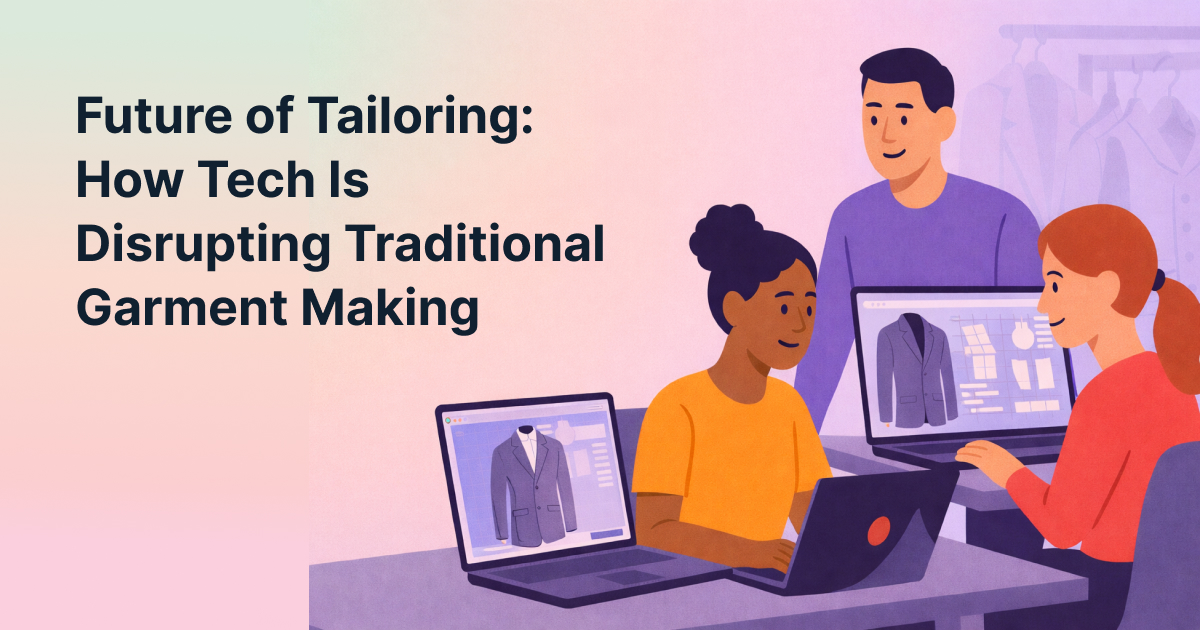
The future of tailoring is no longer limited to needles, paper patterns, and long waiting times. Technology is gradually transforming the way clothes are made, sewn and distributed. What used to be purely based on manual labor is now backed by intelligent means and electronic systems.
This change is a real revolution in the garment industry.
Reimagine Customer Experience
From 3D product customization to next-gen business tools, iDesigniBuy helps brands deliver interactive, future-ready shopping experiences.
Explore Our SolutionsWhy Traditional Tailoring Needed Change
There has always been respect towards traditional tailoring in terms of craftsmanship. Tailors are the people who know about fabric, fit and finishing more than anyone. Nevertheless, the conventional procedure also has its shortcomings:
- Measures rely on human judgement
- Production takes time There is a tendency to make changes
- Fabric waste is common
- Several customers are challenging to scale quality
Meanwhile, the customer expectations have been altered. Customers are now demanding quicker service, increased fit and choice. In response to those needs, the garment manufacturing industry has begun to use technology in the form that it does not replace tailors but rather complements them.
Technology’s Role in Modern Garment Design
One of the largest transformations is the way clothes are designed prior to their creation.
In the past, it was carried out on paper where designs were drawn, and patterns were made manually. A good deal of this today occurs online. Designers are able to see clothing in a screen, make lots of changes swiftly and test the ideas prior to the commencement of the production.
This approach improves:
- Accuracy
- Speed
- Planning
- Resource usage
For a deeper look at how modern tools are helping brands innovate in fashion, see Top 10 Fashion Tech Trends to Watch in 2025
Better Fit Through Smarter Tools
Fit has always been one of the biggest challenges in tailoring. Small measurement errors can lead to discomfort and repeated alterations.
Technology is helping solve this problem.
Digital measurement tools allow sizes to be captured more accurately and stored for future use. Once measurements are recorded, they can be reused for repeat orders. This reduces errors and improves consistency.
For customers, this means:
- Better-fitting clothes
- Fewer alterations
- Less time spent on fittings
These improvements are a major reason why the future of tailoring feels more convenient than traditional methods.
For example, Virtual Trial Rooms let customers preview how garments will look and fit digitally before they buy, improving confidence and reducing returns.
How Tech Is Changing the Garment Manufacturing Industry
Technology is not only used at the design stage, it also supports production.
In many workshops and factories, smart tools assist with:
- Pattern making
- Fabric cutting
- Stitching support
- Quality checks
This does not mean machines are doing everything. Instead, technology reduces repetitive work and minimizes mistakes. Skilled professionals still play a key role, especially in finishing and quality control.
This balance is helping the garment manufacturing industry become faster and more reliable without losing craftsmanship.
To see how apparel customization itself is evolving, including AI-assisted workflows, check out how AI is revolutionizing apparel customization in 2025
Fashion Technology Trends Shaping Tailoring
Several fashion technology trends are influencing how tailoring works today:
- Digital design tools for faster planning
- Automated cutting for better accuracy
- Made-to-order production models
- Data-driven sizing and demand planning
These trends help businesses reduce waste, control costs, and deliver better results. They also make customization more accessible, which was once limited to high-end tailoring.
This shift is a clear sign of the revolution in the garment industry.
Customization Without Complication
In the past, custom-made clothing was expensive and time-consuming. Today, technology allows personalization without slowing down production.
Customers can:
- Choose styles and fabrics
- Select sizes more confidently
- Place orders with fewer fittings
At the same time, businesses can manage orders efficiently and avoid overproduction. This balance between personalization and efficiency defines modern tailoring.
Sustainability and Responsible Production
Sustainability has become an important concern across industries, including fashion.
Traditional garment making often results in leftover fabric, unsold stock, and repeated sampling. With digital planning and made-to-order production, waste can be reduced.
Technology helps by:
- Improving cutting accuracy
- Reducing unnecessary samples
- Supporting better production planning
As a result, the garment manufacturing industry can operate in a more responsible way, benefiting both businesses and the environment.
Does Technology Replace Tailors?
This is a common concern, but the answer is simple: no.
Technology does not replace tailoring skills. It supports them.
Machines and software handle technical and repetitive tasks, while human expertise focuses on:
- Fit adjustments
- Fabric handling
- Detailing and finishing
- Creative decisions
The future of tailoring is about combining human skill with modern tools, not choosing one over the other.
What Lies Ahead
As technology continues to improve, tailoring will become even more efficient and customer friendly. We can expect:
- Faster production cycles
- Smarter design tools
- Improved fit accuracy
- Wider adoption of digital processes
These changes will further strengthen the ongoing revolution in the garment industry.
Conclusion
The cutting and clothing industry is undergoing transformations. The area that relied solely on human effort is now aided by technology for added precision, speed, and sustainability.
Technology is impacting the clothing production industry from smarter garment design to more efficient production in manufacturing industry. The change is beneficial to consumers, businesses, and professionals.
The future of tailoring is no longer about diminishing tradition, it is about enhancing it with innovation.
If you’re ready to embrace the future of tailoring with smart, technology-driven solutions, connect with our experts today.
Transform Your Business with Unmatched Customization
Looking to boost sales and engage customers like never before? Discover how our next-generation design software can turn your products into a revenue-generating powerhouse.
Request a Free DemoFAQs
1. What is meant by the future of tailoring?
The future of tailoring refers to using technology to improve how clothes are designed, fitted, and made, while still keeping traditional craftsmanship.
2. How is technology disrupting traditional garment making?
Technology is disrupting traditional garment making by making processes faster, more accurate, and less wasteful through digital design, smart measurements, and automated tools.
3. What role does garment design play in modern tailoring?
Garment design helps plan clothes digitally before production, reducing errors, saving time, and improving overall fit and quality.
4. Why is the garment manufacturing industry adopting technology?
The garment manufacturing industry uses technology to meet customer demand for faster delivery, better fit, customization, and sustainable production.
5. Does fashion technology replace tailors?
No, fashion technology supports tailors by reducing manual effort, while skilled professionals focus on fitting, finishing, and quality.
