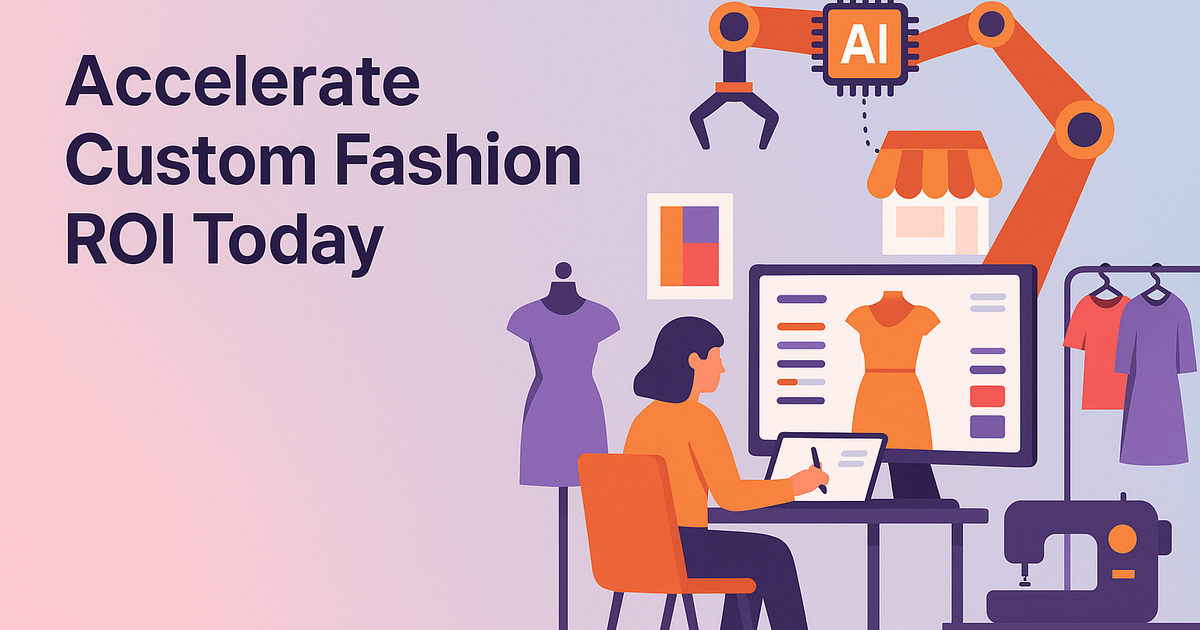
Profit margins shrink with every design revision, pattern re-draft, or client return—costly friction that escalates with each collection. However, the next wave of easy-to-use, AI-driven tools promises a future where creative ideas move from concept to storefront in days, not months, all while maintaining bespoke quality. In fact, 65% of fashion executives say they will increase investment in AI clothing design tools by 2025. In the paragraphs that follow, you’ll discover how AI fashion design software is streamlining every step of the made-to-measure workflow, the specific capabilities you can deploy right now, and the business outcomes that deliver a measurable ROI.
Why 2025 Is the Tipping Point for AI in Custom Fashion
Fashion technology has matured quickly, but three market forces make 2025 particularly pivotal for the adoption of fashion AI tools 2025:
- Consumer demand for hyper-personalization has collided with same-day shipping expectations, forcing brands to compress design-to-delivery timelines without sacrificing craftsmanship.
- Cloud infrastructure and edge computing now support real-time preview and 3D rendering directly in a browser, no bulky workstation required. This makes AI-powered clothing design platforms accessible to a wider range of designers.
- Open-standard APIs allow web-to-print, ERP, and PLM platforms to communicate smoothly, removing the integration bottlenecks that once held AI clothing design tools back.
The result is that AI-powered fashion illustration and smart product configurator engines are no longer experimental; they’re revenue-critical.
Reimagine Customer Experience
From 3D product customization to next-gen business tools, iDesigniBuy helps brands deliver interactive, future-ready shopping experiences.
Explore Our SolutionsFive Game-Changing AI Capabilities Redefining Made-to-Measure
1. Data-Driven Trend Forecasting
Pattern recognition models analyze social media images, sell-through data, and runway archives to detect emerging silhouettes or color palettes. Designers receive actionable prompts instead of 200-page reports, slashing research time while increasing hit rates on new styles.
2. Generative AI Sketching
Text-to-design generators turn a short creative brief (“vegan leather moto jacket with asymmetrical zip”) into dozens of print-ready vector templates. Teams move straight to real-time preview without spending days on initial illustrations, accelerating concept generation by up to 40 %.
3. Photorealistic 3D & Real-Time Preview
High-resolution rendering engines give buyers instant, 360-degree views of fabric drape and trim details. Because the visualization is data-driven, changes ripple automatically from sketch to BOM to checkout, supporting a seamless integration with downstream manufacturing.
4. Smart Fit Prediction
Machine learning in fashion design ingests body-scan data and past return records to recommend pattern grading adjustments. Not only do customers enjoy fewer size surprises, but factories cut material waste, directly improving gross margin.
5. Automated Material Selection & Sustainability Scoring
AI models rank fabric options on cost, carbon footprint, and lead time, allowing time-pressed decision makers to balance aesthetics with sustainability KPIs. A single click can generate compliance documentation for eco-labeling standards, keeping brands on the right side of regulation.
Overcoming Legacy Roadblocks: Integration, UX, and Performance
Even the best AI fashion design software 2025 can fall short if it creates new headaches. This is where a decade of expertise matters. iDesigniBuy’s product configurator suite delivers:
- User-friendly Interfaces: Drag-and-drop templates and plain-language menus keep workflows intuitive for non-technical designers.
- Plug-and-Play API Connectivity: Out-of-the-box connectors link ERP, PLM, and e-commerce storefronts into one seamless pipeline, with no hidden fees or costly custom code.
- Optimized Cloud Architecture: Fast loading and efficient processing ensure high-quality, real-time previews, even during seasonal traffic spikes.
Because integration projects typically account for 60% of deployment cost, eliminating this complexity creates an immediate competitive edge and shortens the time to value.
From Studio to Storefront: Business Outcomes That Matter
Implementing AI fashion design software isn’t about flashy tech; it’s about measurable impact:
- Cycle-Time Reduction: Brands using fashion AI tools 2025 report concept-to-sample timelines cut from eight weeks to less than three, freeing capacity for more frequent drops.
- Margin Protection: Accurate visualization and smart fit prediction reduce remake rates, protecting profitability without compromising quality.
- Revenue Lift: Personalized experiences and AI-driven recommendations raise average order value while deepening customer loyalty.
When your teams design faster, sell smarter, and manufacture leaner, the ROI compounds across the entire value chain.
Pro Tip
Embed AI checkpoints—trend forecast, generative sketch, fit verification—early in your workflow. Catching misaligned designs within the first 48 hours saves exponentially more than fixing them during production.
Checklist: Choosing the Right AI Fashion Design Solution for 2025
Before you sign a contract, evaluate any vendor against these six business-critical questions:
- Integration Readiness: Does the platform provide documented APIs, pre-built ERP/PLM connectors, and sandbox access for stress-free pilot testing?
- User Experience: Can non-technical staff navigate the interface in under 30 minutes? Look for intuitive iconography, in-app tutorials, and role-based dashboards.
- Real-Time Preview Quality: Request sample renders at 4K resolution to assess lighting realism, fabric drape, and load times on both desktop and mobile.
- Scalability and Performance: Verify cloud infrastructure, CDN support, and auto-scaling policies to guarantee fast response during flash sales or collection launches.
- Transparent Pricing: Compare SaaS tiers, overage fees, and upgrade paths to avoid unpleasant surprises as your usage grows.
- Vendor Credibility: Seek providers with proven solutions, documented success stories in fashion and print, and a mature product roadmap.
The Human Touch Still Matters
Technology augments creativity; it doesn’t replace it. Designers remain the curators of brand DNA, while AI-powered clothing design platforms become the tireless assistant that crunches data and automates low-value tasks. Forward-thinking companies invest in upskilling staff to work alongside intelligent systems, ensuring the marriage of craftsmanship and computation yields truly bespoke garments.
Transform Your Business with Unmatched Customization
Looking to boost sales and engage customers like never before? Discover how our next-generation design software can turn your products into a revenue-generating powerhouse.
Request a Free DemoConclusion: Next Steps
AI is no longer a speculative add-on—it’s the strategic engine that delivers faster workflows, higher margins, and an unbeatable customer experience. iDesigniBuy’s advanced, scalable platform distills those capabilities into an intuitive product configurator your team can deploy in weeks, not months. Ready to secure your competitive edge with AI fashion design software that’s purpose-built for 2025? Know More and book a personalized demo today.
